
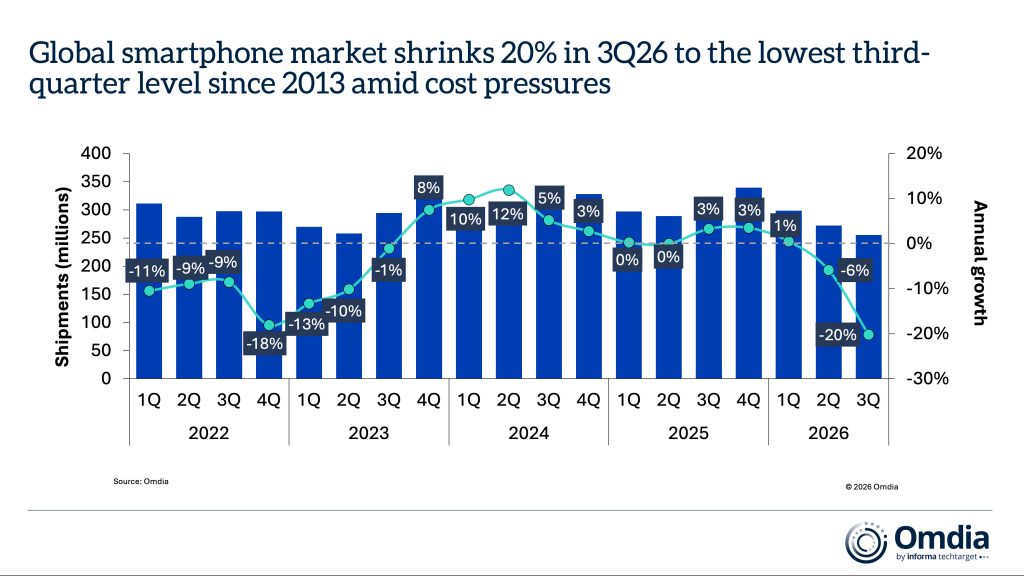
The smartphone industry had recorded a sharp decline in Q3 2026, with shipments falling 20% year-on-year as rising memory and storage costs put increasing pressure on device makers.
According to preliminary estimates from Omdia, the decline in Q3 2026 was significantly worse than the 6% year-on-year drop recorded in the previous quarter. It is also said to be the lowest Q3 quarter since 2013.
Interestingly, the RAM crisis has affected smartphone brands differently. Samsung and Apple have managed to gain more market share, while brands that depend more heavily on affordable and lower-margin devices face greater pressure.
Samsung and Apple now account for 45% of global smartphone shipments
Based on the latest data from Omdia, Samsung remained the world’s #1 smartphone maker in Q3 2026 with a 23% market share, despite the year-on-year decline in shipments. It gained 4% market share from 19% in Q3 2025.
According to Omdia, Samsung’s broad product portfolio and established global channel has helped to cushion the impact of the market downturn. In addition, its recent launch of the Galaxy Z Fold 8 series has helped to support its premium positioning.
It added that balancing shipment scale with portfolio profitability and premiumisation will be important to sustain Samsung’s position.
Meanwhile, Apple follows very closely behind with a 22% market share, which is jump from 18% in Q3 2025. Despite the overall slowing market, demand for iPhone 17 series remain strong while the recent introduction of the iPhone 18 Pro and iPhone 18 Pro Max has helped to maintain momentum.
Next week, Apple will release the iPhone Duo, its first entry into the foldable smartphone category.
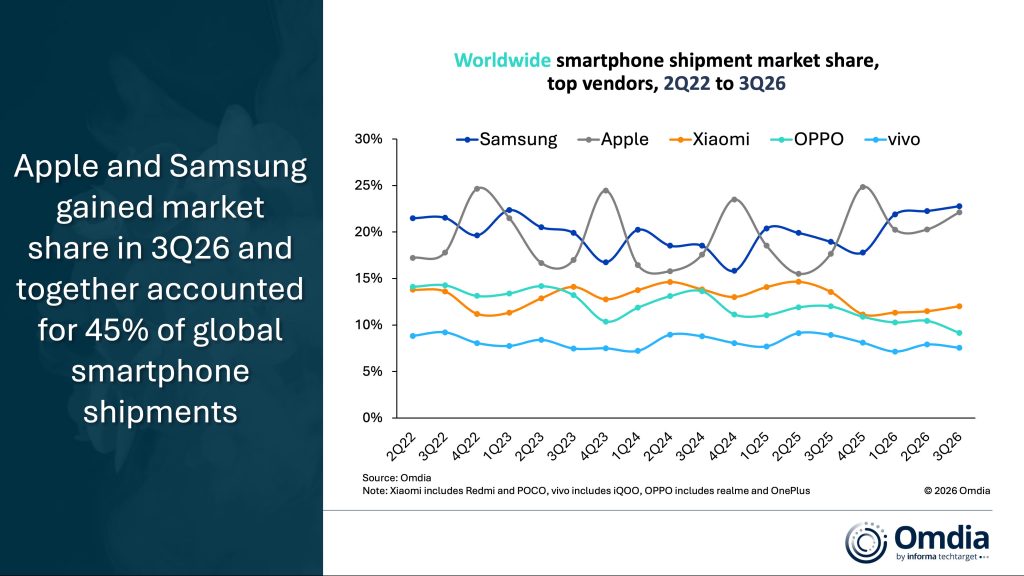
Combined, both Samsung and Apple accounted for 45% of global smartphone shipments in Q3 2026.
That’s about 8% higher than a year ago and this shows that the two largest premium smartphone players remain popular among consumers even during tough times.
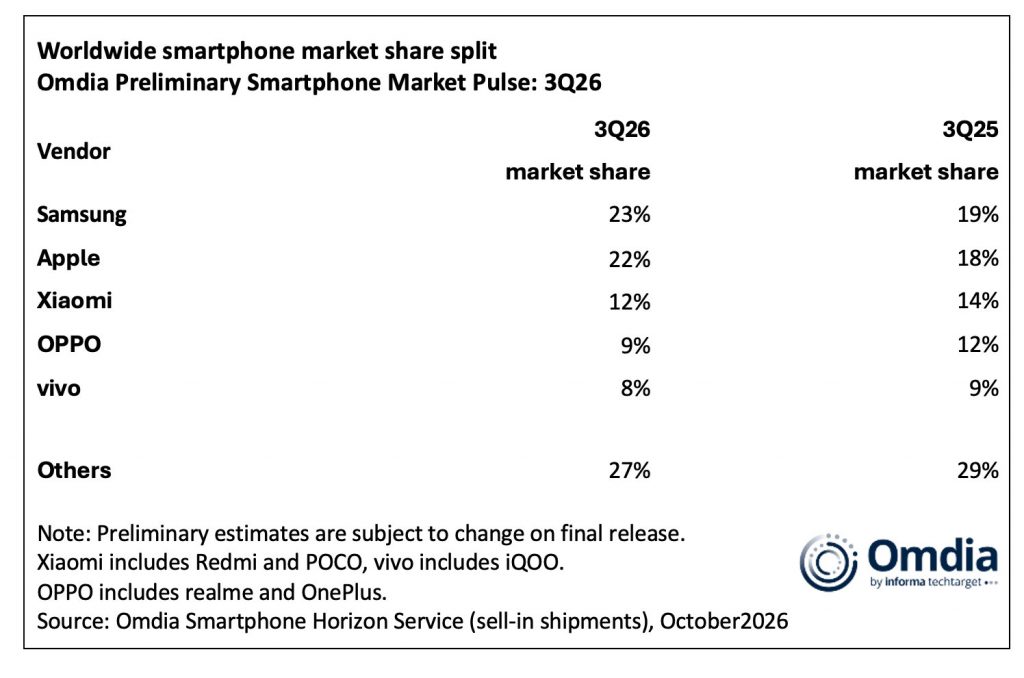
Coming in third place is Xiaomi with 12% market share, followed by Oppo in fourth place with 9% market share and Vivo in fifth with 8% market share.
The three combined Chinese smartphone brands recorded a year-on-year market share decline of 6% from 35% to 29%.
The data for Xiaomi includes Redmi and Poco, while Oppo includes its Realme and OnePlus sub-brands. Meanwhile Vivo includes its iQoo sub-brand.
For other smartphone brands below the Top 5, the remaining segment saw an overall decline from 29% to 27% in Q3 2026.
Rising memory costs are squeezing cheaper smartphones
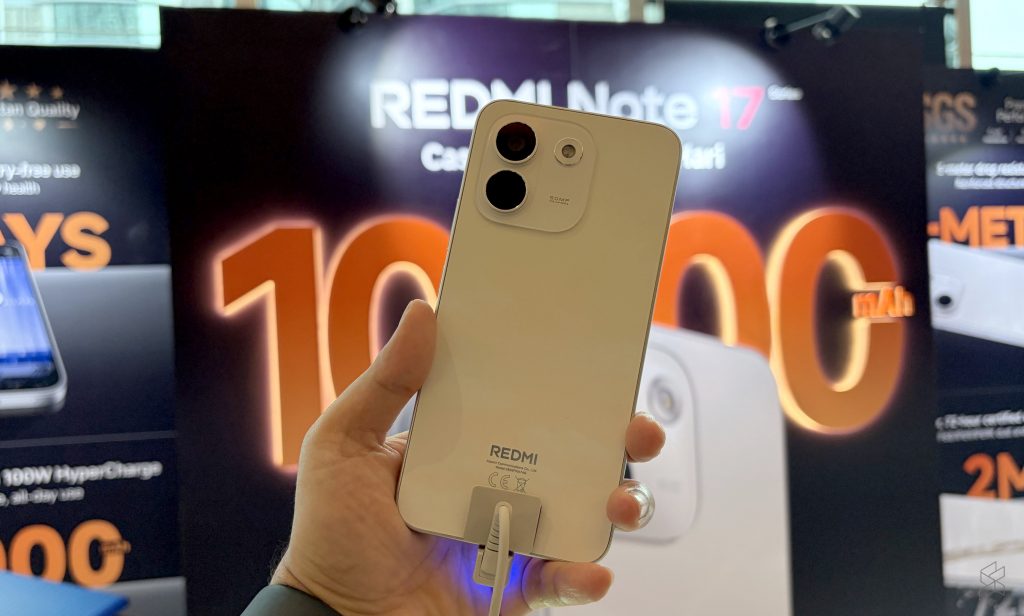
One of the biggest issues facing smartphone manufacturers is the rising cost of memory and storage.
The impact can already be seen in recent entry and mid-range smartphones where newer devices are priced higher yet offer less RAM than its predecessors. Some brands have even cancelled plans to release a budget model this year.
Omdia said the current pressures are forcing vendors to reassess the profitability of their entry-level portfolios and make more selective decisions about product positioning, pricing and market coverage. They added that brands are prioritising average selling price growth and portfolio optimisation to sustain shipment value while protecting profitability.
Omdia Principal Analyst Hayden Hou said, “As vendors make different trade-offs between shipment scale, revenue and profitability, their performance needs to be assessed beyond unit shipments. More importantly, the strategic decisions made during this downturn could have lasting implications beyond the current cost cycle. Investments in new channel partnerships, device financing capabilities and stronger premium portfolios will help determine which vendors emerge with a more competitive and sustainable business model once cost pressures ease.”
Meanwhile, Omdia Senior Analyst Lucas Zhong said vendors competing primarily on affordability, protecting profitability without sacrificing shipment scale has becoming an increasingly difficult balancing act.
He added, “This pressure is particularly acute in emerging markets, where consumers are more price-sensitive and vendors rely heavily on entry-level devices with already thin profit margins. However, scaling back shipments to protect margins carries long-term risks, particularly for emerging vendors, as losing market presence can weaken brand visibility and channel mindshare, which may take years to rebuild. Rather than withdrawing across the board, vendors need to make more deliberate choices about where to compete, concentrating resources on markets and products that can sustain both profitability and market relevance.”
Recovery isn’t expected in Q4 2026
The situation isn’t expected to improve dramatically in the final quarter of 2026.
Omdia said new flagship launches, promotions and festive demand are unlikely to fully offset continued supply-side pressures.
Rather than relying heavily on discounts, smartphone brands would have to look into effective financing, trade-in programmes and telco partnerships to encourage consumers to upgrade their phones.
At the same time, Omdia says the higher smartphone prices are gradually resetting what consumers are willing to pay for their next device.
The situation may create greater opportunity for more expensive smartphones in future replacement models, provided they can make those devices accessible and convince consumers that an upgrade is worthwhile.
0 comments :
Post a Comment