
AMD is betting big on its next phase of artificial intelligence. The chipmaker has announced plans to acquire World Labs, the spatial intelligence AI startup founded by computer vision pioneer Dr Fei-Fei Li, in an all-stock deal valued at approximately USD8.2 billion (about RM33 billion).
The acquisition is expected to be completed by the end of 2026, subject to regulatory approvals and other customary closing conditions. Once the deal is completed, World Labs will continue its AI model research while Li will join AMD as Executive Vice President and Chief Scientist, reporting directly to AMD Chair and CEO Dr Lisa Su.
For AMD, this is more than just acquiring another AI company. World Labs specialises in AI models that can understand, generate and simulate 3D environments, which could play an increasingly important role in robotics, simulation and physical AI.
What is World Labs?
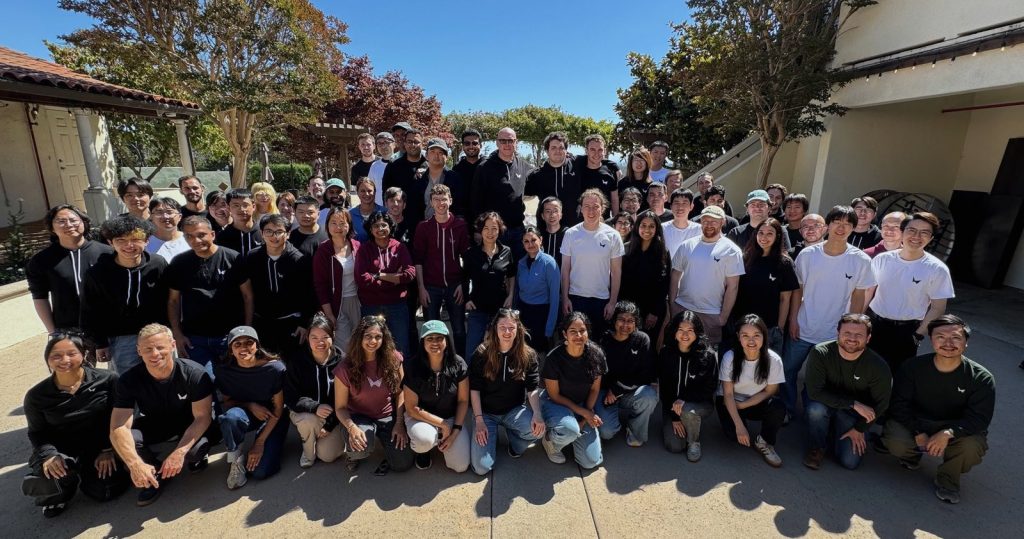
World Labs is a San Francisco-based AI research company that focuses on spatial intelligence, which teaches AI to understand about the structure and behaviour of the physical and virtual world.
Li said World Labs was founded in early 2024 based on the view that language alone is not sufficient for the next stage of AI development. While large language models are built around words and tokens, many real-world problems in areas such as robotics, science, design and entertainment require AI to understand objects, spaces, geometry, movement and physical interaction.
The company was founded by Li together with Ben Mildenhall, Justin Johnson and Christoph Lassner, bringing together expertise in computer vision, generative AI, computer graphics and large-scale model training.
Li herself is one of the most prominent names in modern computer vision. Her earlier work on ImageNet helped establish large-scale visual datasets and benchmarks that contributed to major advances in deep learning and computer vision.
World Labs is now attempting to push AI beyond recognising images or generating video towards models that can understand environments in 3D.
World Labs is building AI that understands 3D worlds

One of World Labs’ key projects is Atlas, an AI model designed to work across images, video and 3D information.
Atlas is described by Dr Li as an omni-model that tackles what she calls a longstanding spatial intelligence problem: predicting a new camera view from a limited set of 2D images.
Similar to how a large language model predicts the next token in a sequence, Atlas can predict what a scene would look like from another viewpoint while maintaining its spatial structure.
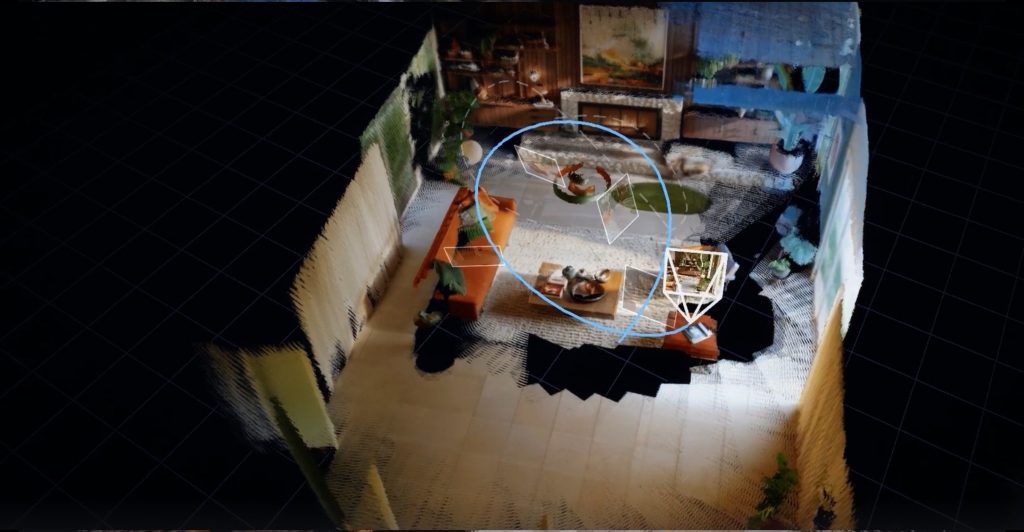
According to Li, this approach combines generative AI with multiview geometry and it can be applied to areas including design, engineering, science and robotics.
World Labs says it has seen interest in Atlas for robotics reinforcement-learning environments, scene generation and reconstructing real-world locations for real estate, design and construction.
The company is also developing Marble, a world model designed to generate persistent and explorable 3D environments from multimodal prompts.
The technology can potentially be used by filmmakers, game developers, designers and other creators to quickly create new virtual environments.
The company has also moved deeper into robotics through its acquisition of SceniX, as it works on combining spatial intelligence with robotic simulation and training.
Why is AMD buying an AI model company?
According to Li, the two companies have been working together since World Labs’ early days, with AMD CEO Lisa Su among the startup’s early investors and supporters.
More recently, the companies began a deeper technical partnership involving model training and inference optimisation on AMD GPUs.
Li said World Labs ultimately concluded that advancing spatial intelligence required it to get closer to the underlying hardware.
“Without having a focused hardware effort, AI is hobbled in efficiency. And scale. And for our purposes, remains trapped in the digital world,” she said.
That helps explain why AMD is interested in owning an AI research lab rather than simply supplying it with GPUs.
AMD says the demands on computing infrastructure are becoming more diverse as AI expands beyond today’s generative models into reasoning, robotics, simulation and physical AI.
By bringing World Labs’ researchers in-house, AMD gains direct insight into how these emerging AI workloads are developing, which could in turn influence its future CPU, GPU, software and system designs.
“Building the compute platforms for the next generation of AI requires a deep understanding of how models are evolving,” said AMD Chair and CEO Dr Lisa Su.
She added, “Fei-Fei and the World Labs team bring exceptional research leadership and model expertise. Together, we can use that insight to develop the hardware, software and systems that will power the next generation of AI and strengthen the open AI ecosystem.”
Li also echoed the partnership as bringing together software and hardware, foundation models and applications.
She said World Labs and AMD intend to continue building an open AI ecosystem spanning hardware, software, AI models and the data platforms required to train them.
Why World Labs matters to AMD’s AI ambitions

By acquiring World Labs, AMD will gain an in-house team developing the kinds of AI models future hardware may need to run.
Its work on spatial intelligence could be particularly relevant for robotics, simulation and physical AI which would help AMD to design future CPUs, GPUs, software and systems alongside the researchers building these new workloads.
The acquisition also enables AMD to go beyond supplying chips for AI models developed elsewhere. It brings together AI model research and hardware development closer together as the industry expands beyond text and image generation.
0 comments :
Post a Comment