
Nvidia has been traditionally known for making graphics processors that power gaming PCs, workstations and AI servers. The company is now entering the consumer PC market with RTX Spark, its very own integrated CPU and GPU platform.
Announced at Computex 2026, RTX Spark combines a custom ARM-based CPU, Nvidia Blackwell GPU and AI acceleration into a single chip platform designed for laptops and desktops. Nvidia declares that RTX Spark will serve as foundation for a new generation of AI PCs capable of running increasingly sophisticated AI models and AI agents locally.
The move puts Nvidia in direct competition with Apple’s M-series chips and Qualcomm’s Snapdragon X platform, both of which have helped popularise highly integrated ARM-based computing that combines strong performance with improved power efficiency.
RTX Spark: Up to 20-core CPU and up to 6144 Core Blackwell RTX GPU
At its core, RTX Spark is a Windows-on-ARM platform built on TSMC’s 3nm process and packs 70 billion transistors. The architecture combines a custom ARM-based CPU developed in collaboration with MediaTek with a Blackwell RTX GPU on a single chip.
Nvidia says the platform uses its NVLink-C2C interconnect technology, enabling up to 600GB/s of bandwidth between the CPU and GPU. Combined with a unified memory architecture, the company says this allows larger AI models and workloads to run more efficiently on-device.
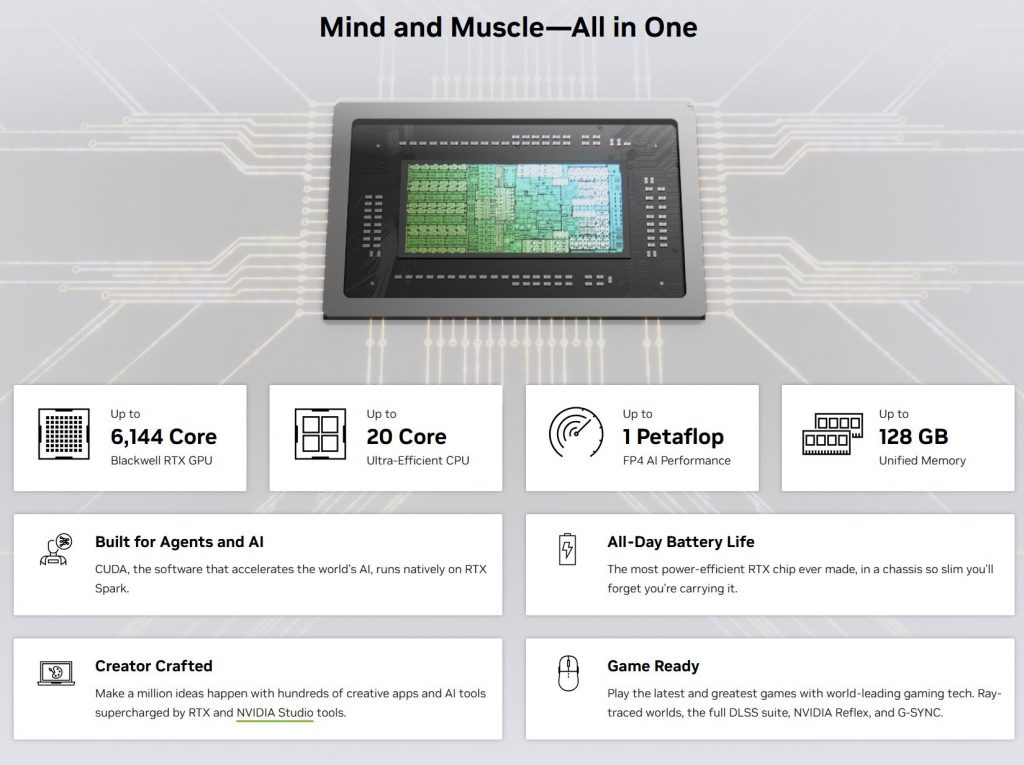
According to Nvidia, RTX Spark offers up to a 20-core ultra-efficient CPU, up to a 6,144-core Blackwell RTX GPU, up to 128GB of LPDDR5X unified memory and up to 1 petaFLOP of FP4 AI performance.
Nvidia also says the platform can support AI models with up to 120 billion parameters running locally.
Nvidia is betting on AI agents
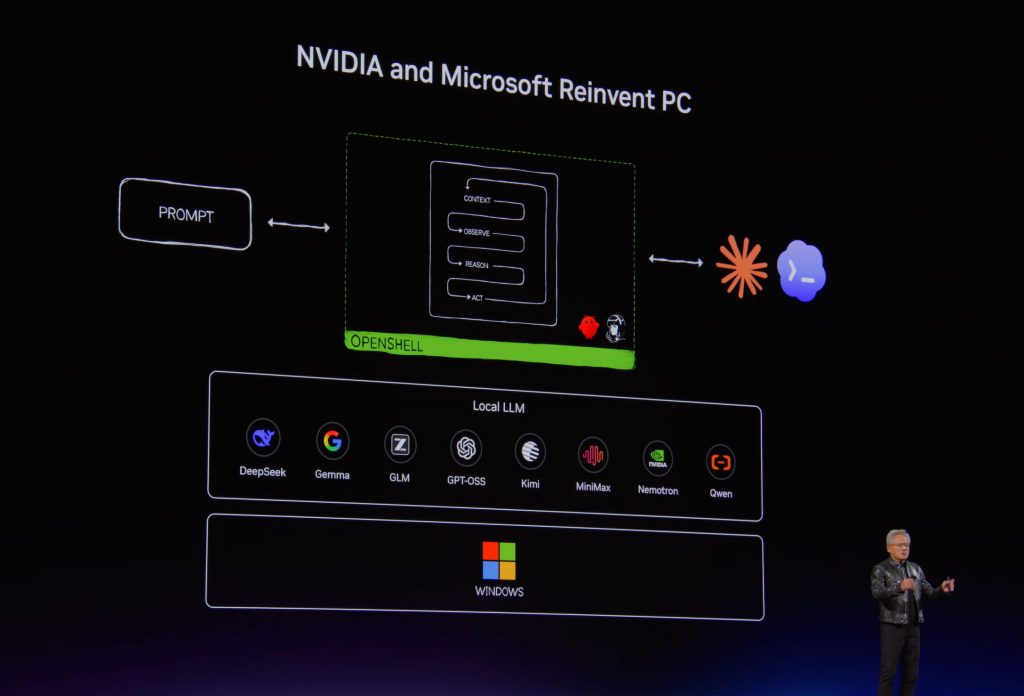
RTX Spark is more than just Nvidia’s first consumer PC processor. The company is positioning it as a platform for the next generation of AI PCs that can run increasingly capable AI models and AI agents locally.
During Computex 2026, Nvidia and Microsoft highlighted how RTX Spark-powered PCs could be used to develop and run AI agents directly on-device instead of relying entirely on cloud-based services. Nvidia believes AI agents could assist with tasks such as content creation, software development, research and productivity workflows.
Nvidia is also working closely with software developers to optimise applications for RTX Spark. The company highlighted new RTX Spark versions of Adobe Premiere Pro and Photoshop, which it says can deliver up to 2x faster performance while introducing creative agent-ready workflows that can leverage AI to assist creative tasks.
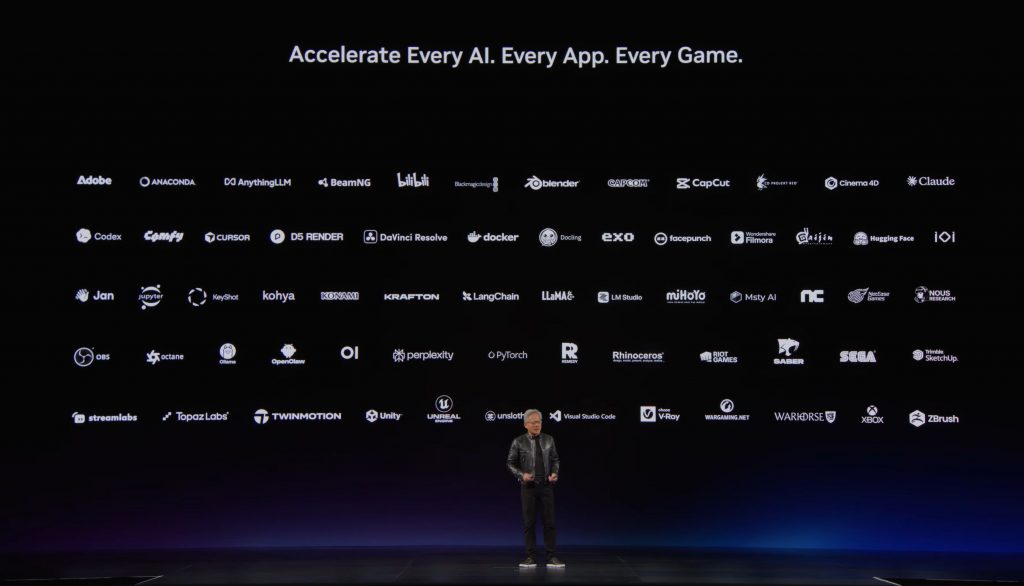
Nvidia is also bringing its broader RTX ecosystem to the platform. The company says RTX Spark supports more than 1,000 RTX-accelerated applications and games, spanning AI, content creation, productivity and gaming workloads.
Nvidia also claims RTX Spark systems can handle demanding workloads such as 12K video editing, AI video generation and gaming at over 100fps at 1440p.
As with all manufacturer-provided performance claims, independent testing will be needed to verify real-world results.
Nvidia’s biggest PC move yet
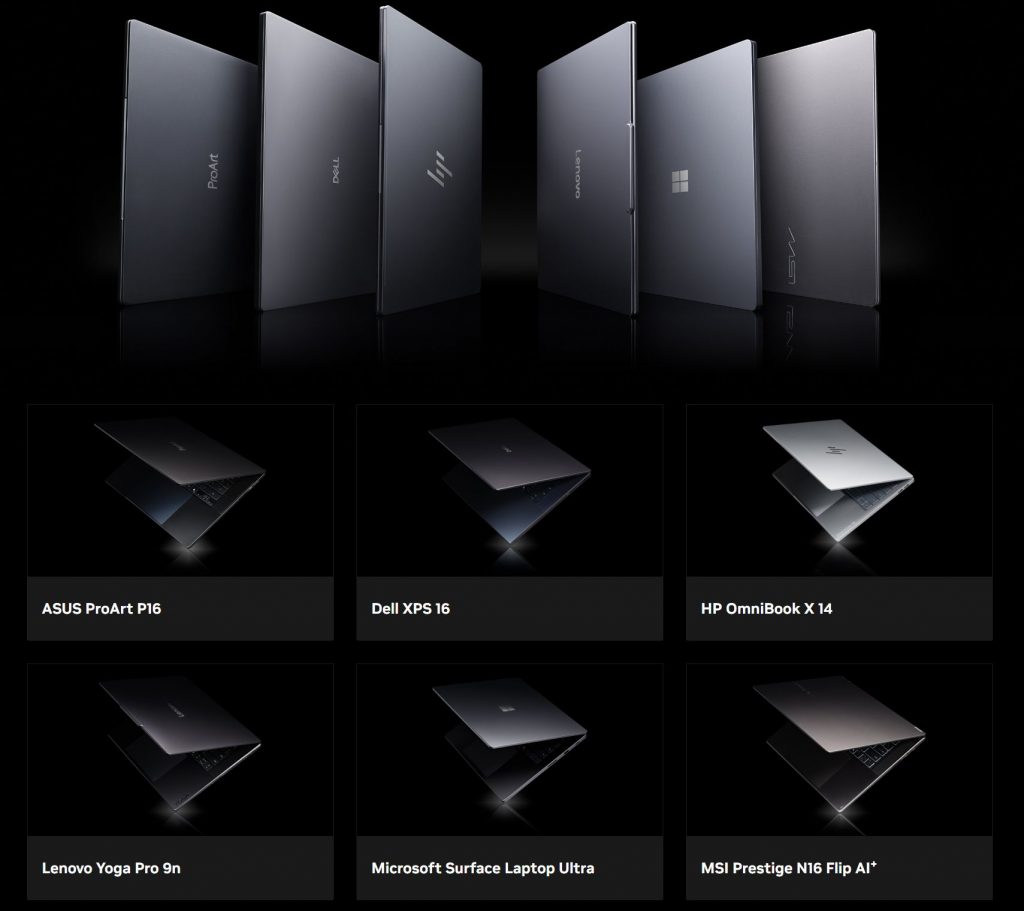
Nvidia has already secured support from major PC manufacturers including ASUS, Dell, HP, Lenovo, Microsoft and MSI, with the first wave of devices expected to arrive later this year.
Several manufacturers have already announced RTX Spark-powered systems, including the ASUS ProArt P16 and ProArt P14, MSI Prestige N16 Flip AI+, Dell XPS 16, Lenovo Yoga Pro 9n, HP OmniBook X 14, HP OmniBook Ultra 16 and Microsoft’s new Surface Laptop Ultra.
Interestingly, the first wave of RTX Spark devices are largely creator-focused and productivity-oriented machines rather than gaming laptops. This suggests Nvidia is initially targeting content creators, developers and AI power users who can benefit from local AI processing, AI agents and accelerated creative workflows.
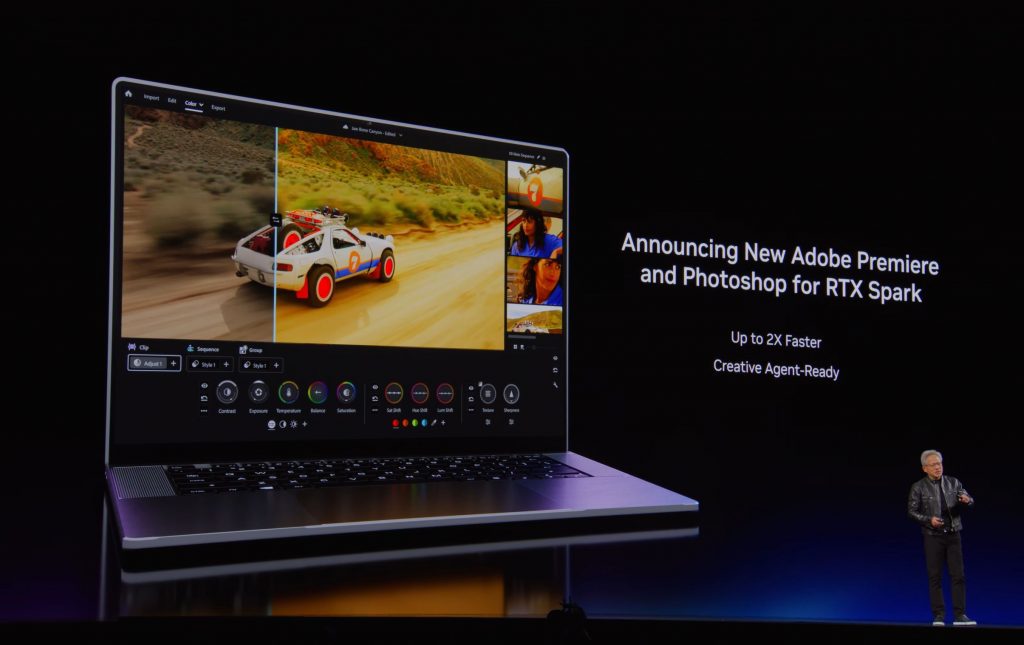
Nvidia has already highlighted optimised versions of Adobe Premiere Pro and Photoshop for RTX Spark, with support for creative agent-ready workflows and it boasts up to 2x faster performance. While gaming remains part of the equation, the first RTX Spark devices appear to be geared more towards AI and creative workloads than traditional gaming use cases.
The move also puts Nvidia head-to-head with Qualcomm, which has been aggressively expanding its Snapdragon X ecosystem for Windows AI PCs. Unlike Qualcomm, however, Nvidia enters the market with an established RTX ecosystem that already supports more than 1,000 accelerated applications and games, alongside technologies such as CUDA, TensorRT, RTX AI and DLSS.
Can RTX Spark avoid the usual Windows-on-ARM pitfalls?
Whenever a new Windows-on-ARM platform launches, the biggest question is software compatibility. Can it run legacy x86 applications and games smoothly, or will users still face limitations compared to traditional Intel and AMD PCs?
Nvidia believes RTX Spark is better positioned than previous ARM-based platforms. Microsoft has upgraded its Prism emulation technology, which Nvidia says has been optimised for RTX Spark. On top of that, Nvidia brings a mature software ecosystem built around established technologies such as CUDA, TensorRT, RTX AI and DLSS. According to the company, RTX Spark already supports more than 1,000 RTX-accelerated applications and games.
Gaming compatibility has historically been another major hurdle for ARM-based Windows devices, particularly due to anti-cheat and DRM requirements. To address this, Nvidia says RTX Spark will support major anti-cheat and DRM technologies including Easy Anti-Cheat, BattlEye and Denuvo. This should help improve compatibility with a wider range of PC games.
Ultimately, the biggest test for RTX Spark is whether it can combine the power efficiency benefits of ARM architecture with the gaming performance and software compatibility that users expect from traditional x86 PCs. As always, we will have to wait for independent reviews to see if Nvidia can deliver on these promises.
0 comments :
Post a Comment